Thursday, December 3, 2020

 Certification in Secondary Education- Social Studies (7-12) | Eastern  University

Over the course of the quarter I have felt like I have learned, so much about inquiry and how to use it in other disciplines. My first exposure to inquiry-based learning was through math, but now I feel like I really understand the methods behind it and how to work in that type of classroom. The first quarter I worked with inquiry was kind of a struggle for me, but after the learning curve I understood why it works especially after this class. Using inquiry is such a great way to integrate different subjects and to make learning active for students. Students will be familiar with primary sources at a younger age instead of junior high and they are able to think critically about a question using the resources given over the unit.

I feel like this quarter was filled with methods and ideas for teaching. Before this quarter I feel like we have just been focusing on the content and how students think, however we haven’t talked much about the structure of the classroom. This quarter was a crash course about lesson planning and how to structure the classroom. During the quarter I was able to be a part of some great lessons that I will use and be inspired by. I think the culture fair is such a great way for students to introduce themselves during the beginning of the year. The lesson with the civil war is great way to provide with a simulation of an event and make it come to life.

Finally, it was nice to get a sense of what students are learning in the classroom and the standards that are used in social studies. The foundational elements assignment really helped me understand how form a compelling question then come up with the supporting questions. This assignment made me think more about how to tie the compelling question to both of the standards.

For most schools I feel like the emphasis gets put on math, English and science since those are typically the subjects that get state tested. As a teacher I can seem like this subject along with the performance arts often get put aside and gets little thought. My concern would be trying to find resources or support for project-based learning.

 7 Great Social Studies Apps for Teachers and Students - EdTechReview

Thursday, October 22, 2020


Write your initial post about Project-based learning. What do you already know about it?

Project-based learning is when students take inspiration from what they have been learning. Students are exposed to various kinds of sources such as pictures, documents, books, and audio this allows students to get a feel of what it was like to be alive during this time. Also, students have a say in the project they complete for example in Hughes the students got to choose the topic of the civil rights movement they covered. When doing the writings, they are able to think and feel what someone at that time might have gone through. They got to relate to content more instead of it just being a lecture and answering questions. The other example was more of a class project that grew with every lesson as the students learned. Overtime they got to watch their city develop through a hands-on process.

What do you think makes it a powerful way to plan for SS inquiry?

Students will naturally have questions and be engaged when they are a part of an activity such as the paper bag city. They are able to take part in their learning and learn through doing. As the project keeps going, they learn new skills as they going along like reading compasses. Students get to think about their thinking and question why things are the way they are.


Link to activities: https://teachingwithamountainview.com/titanic-lessons-experiments-activities/


Here is one of the projects from the blog I liked how this included science elements and students were able to create their own boat. This experiment was to show how much weight a boat can hold before it sinks. They also included an experiment with weak rivets made out of clay. Students are able to see why the Titanic sank.

Thursday, October 15, 2020


Washington State

History ( DCTS Framework)

D2.His.2.3-5. Compare life in specific historical time periods to life today.

Theme #2: Time, Continuity, and Change (NCSS)

Knowledge: Key people, events, and places associated with the history of the community, nation, and world.

Compelling Question:

What would the Pacific Northwest be like if Lewis and Clark never went on their expedition?

Supporting Questions:

  • ·        What specimen and plant life did they discover?
  • ·        How did Lewis and Clark describe the land they surveyed (journals)?
  • ·        How did the tribes they encountered live?
  •      Why did they explore the Northwest?

Compelling Question Answer:

Although Lewis and Clark did not find the northwest passage (a waterway to the pacific) they did make numerous discoveries especially in the Northwest. Through their journals we are able to create an image of what life and land would have been like at the time. They were able to build relationships with natives and gain trust with many. Not much was known about the Northwest at this time, but this was the starting point of exploring the area due to the Louisiana Purchase.

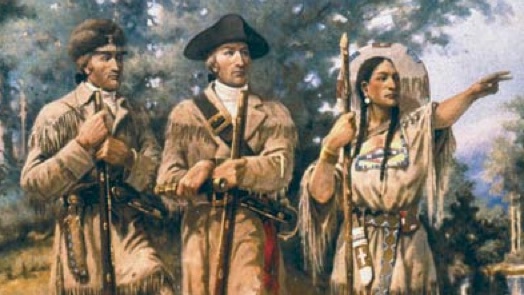
 TBT: The Lewis and Clark Expedition | The Gateway Arch

When looking back on 4th grade history me and my partner both remembered Lewis and Clark. The expedition was always related to Northwest history because it is where the journey ended. Not much was known about this area at the time because the US was divided and owned, by other countries still. For the most part we owned much of the east side, then gained much land from France with the Louisiana Purchase. For deciding our compelling question, we looked at the DCTS guidelines picked one of the four categories and chose a standard. Then chose a them for the NCSS we felt that could expand and explore ideas on. We then thought of our supporting questions thinking about how they saw the Northwest during that time. Through the journals Lewis and Clark kept we can get an idea of the specimens, plants, land, and their experiences with tribes during the expedition. Our supporting questions were meant to show different discoveries Lewis and Clark made. 

 Lewis and Clark journal drawings | Lewis & Clark Journal Entries ... |  Sketch book, Commonplace book, Sketchbook journaling

  Over the course of the quarter I have felt like I have learned, so much about inquiry and how to use it in other disciplines. My first e...